
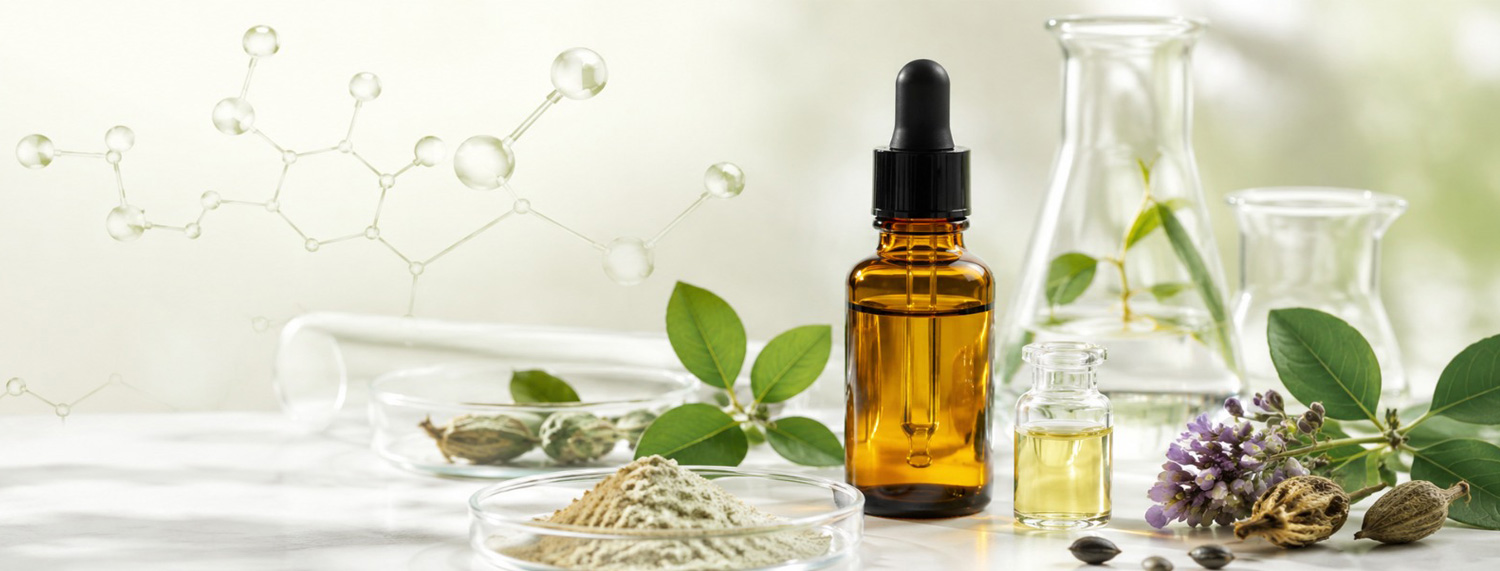
Bakuchiol is a naturally occurring plant derived compound that has gained strong attention in skin care, cosmetic science, nutraceutical research, and botanical ingredient markets. It is mainly associated with the plant Psoralea corylifolia, commonly known as bakuchi or babchi. In recent years, Bakuchiol has become popular because of its connection with aging care formulations, botanical research, and plant based active ingredient development.
In simple words, Bakuchiol is a botanical phytochemical used in modern formulation and research applications. It is often discussed as a natural alternative to retinol in skin care, but it is important to understand that Bakuchiol and retinol are not the same compound. Bakuchiol has its own chemical identity, botanical source, functional properties, and quality requirements.
Why is Bakuchiol gaining attention?
The global interest in Bakuchiol is closely linked to the growing demand for plant-based ingredients. Consumers and formulation companies are looking for ingredients that fit clean beauty, botanical care, vegan positioning, and sensitive-skin-friendly product concepts. This has made Bakuchiol an attractive ingredient for cosmetic and personal care brands.
Bakuchiol is especially known for its use in products focused on skin smoothness, visible aging signs, uneven skin tone, and overall skin appearance. It has also attracted attention because it is generally considered easier to formulate for users who may not tolerate traditional retinol-based products well.
From a B2B perspective, the demand for Bakuchiol is not only about market popularity. Buyers also look at purity, documentation, source traceability, analytical data, and consistency of supply. These factors are important for cosmetic brands, nutraceutical companies, research organizations, and formulation development teams.
Botanical source of Bakuchiol
Bakuchiol is commonly obtained from Psoralea corylifolia, a plant with a long history of use in traditional systems. The seeds of this plant are one of the known sources of Bakuchiol. In ingredient markets, the botanical source plays an important role because buyers often need clarity on plant origin, extraction, purity, and quality documentation.
For professional sourcing, the product name alone is not enough. Buyers should check the botanical source, CAS number, assay method, purity level, appearance, storage guidance, and available documentation. These details help reduce sourcing risk and support smoother product evaluation.
Is Bakuchiol the same as retinol?
No. Bakuchiol is not retinol. Retinol is a vitamin A derivative, while Bakuchiol is a plant derived phenolic compound. The reason they are often compared is that Bakuchiol is used in skin care products that target similar visible concerns, such as fine lines, texture, and uneven tone.
This comparison has made Bakuchiol popular among brands that want to offer a botanical option in aging care formulations. However, it should not be presented as identical to retinol. A better way to describe Bakuchiol is as a plant based ingredient used in formulations inspired by retinol style benefits.
For responsible marketing, brands should avoid exaggerated claims and should follow local cosmetic, nutraceutical, and regulatory guidelines.
Key applications of Bakuchiol
Bakuchiol is used across several product and research areas.
In cosmetic formulations, it is used in serums, creams, lotions, oils, and skin care products focused on aging care, tone improvement, and skin appearance.
In research and analytical applications, Bakuchiol can be used as a botanical marker compound for studies involving Psoralea corylifolia and related phytochemical research.
In nutraceutical and botanical ingredient development, it may be evaluated as part of broader plant based product research, depending on the intended market and regulatory pathway.
In quality control, Bakuchiol can be important for identity testing, standardization, and analytical reference purposes.
Why purity matters in Bakuchiol sourcing
Purity is one of the most important factors in Bakuchiol sourcing. Since Bakuchiol is used in research, formulation development, and quality control settings, buyers need confidence in the material they are evaluating. HPLC purity is commonly used as a quality parameter to indicate the level of assay or purity in the supplied material.
For B2B buyers, a high purity Bakuchiol product can support better consistency in formulation trials, analytical comparison, and development work. Along with purity, documentation such as certificate of analysis, specification sheet, safety data sheet, and batch related details may be required based on the buyer’s application.
What should buyers check before sourcing Bakuchiol?
Before sourcing Bakuchiol, buyers should review the following factors carefully.
The first factor is identity. The product should have clear naming, botanical source, and CAS number.
The second factor is purity. HPLC purity should be clearly mentioned in the specification.
The third factor is documentation. Professional buyers usually need proper quality documents for internal approval and evaluation.
The fourth factor is supply reliability. For growing brands and development programs, one time availability is not enough. Consistent supply planning is important.
The fifth factor is application fit. A material used for research may not automatically be suitable for every formulation or commercial use. Buyers should match the material grade and documentation with their intended application.
Bakuchiol and the future of botanical ingredients
Bakuchiol represents a larger shift in the market. Companies are looking beyond traditional ingredients and exploring plant based compounds with strong formulation potential. The rise of Bakuchiol shows how botanical compounds can move from traditional plant knowledge into modern research, quality control, and commercial formulation pipelines.
This trend also increases the need for reliable B2B sourcing partners. As demand grows, buyers need suppliers who understand quality, documentation, communication, and long term supply requirements.
Global Pharma Tek support for Bakuchiol sourcing
Global Pharma Tek supports B2B sourcing of Bakuchiol for research, analytical, nutraceutical, and formulation development requirements. With defined product identification, HPLC purity specification, and documentation focused support, Global Pharma Tek helps customers evaluate and source botanical marker compounds with greater confidence.
Bakuchiol is more than a trending ingredient. It is a high value botanical compound with growing relevance across skin care, research, quality control, and plant based product development. For companies exploring Bakuchiol, the right sourcing approach should focus on quality, documentation, consistency, and application suitability.
Frequently Asked Questions
What is Bakuchiol?
Bakuchiol is a plant derived phytochemical mainly associated with Psoralea corylifolia. It is widely used in skin care, research, and botanical ingredient development.
What is Bakuchiol used for?
Bakuchiol is commonly used in cosmetic formulations, aging care products, research studies, botanical standardization, and formulation development.
Is Bakuchiol natural?
Bakuchiol is naturally found in plant sources, especially Psoralea corylifolia. Commercial material quality depends on sourcing, processing, purity, and documentation.
Is Bakuchiol the same as retinol?
No. Bakuchiol is not retinol. It is a different plant derived compound, although it is often used in skin care products that target similar visible skin concerns.